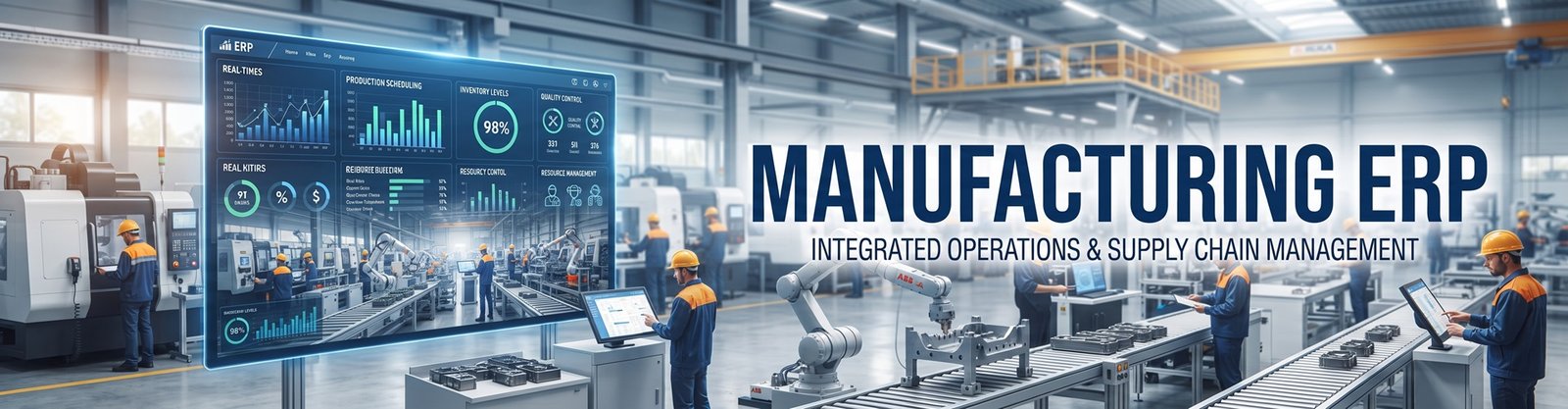
Manufacturing businesses must coordinate multiple processes to keep production running efficiently. From purchasing raw materials and scheduling production to tracking work orders, managing finished goods, and analyzing production costs, disconnected systems can make operations difficult to control.
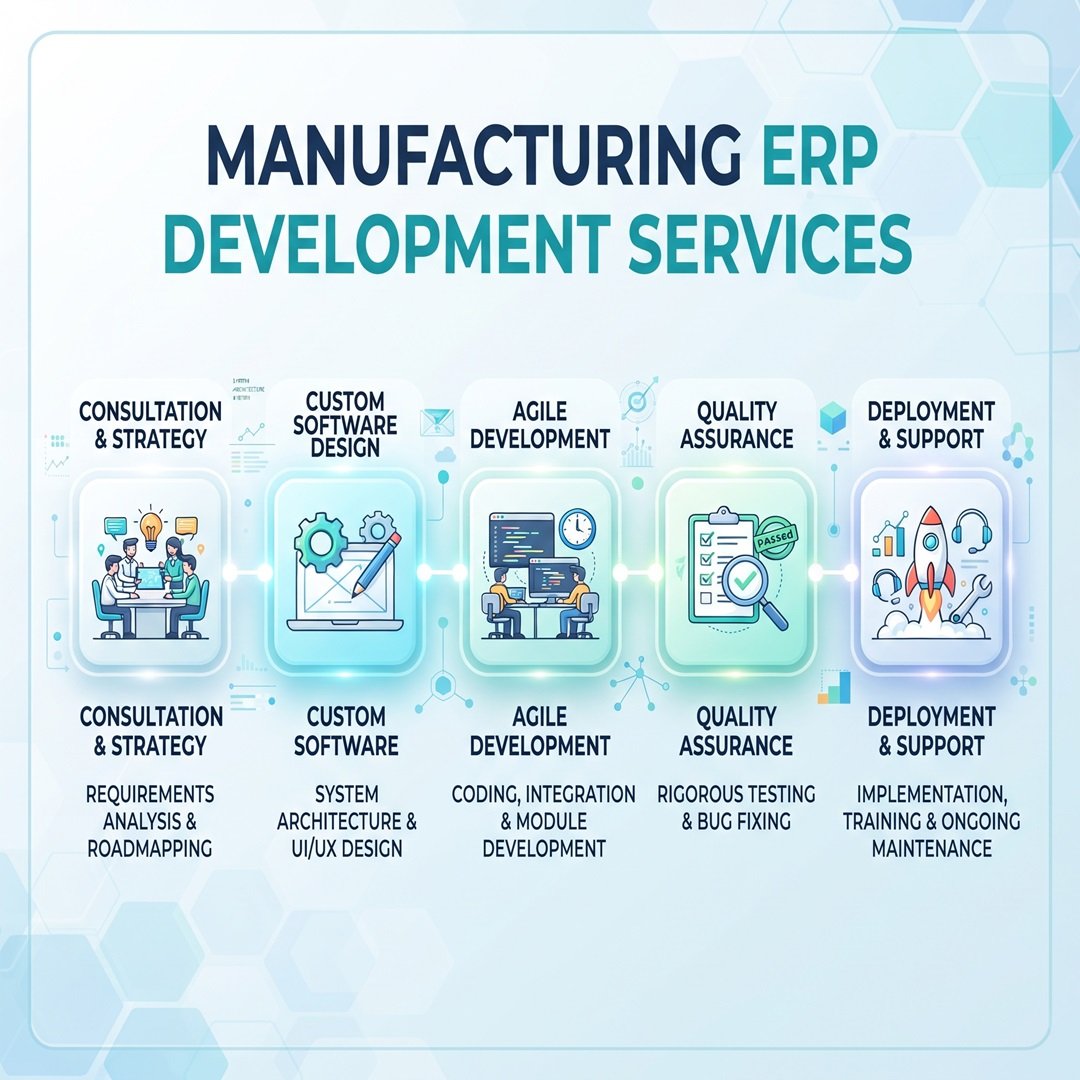
STSB provides Manufacturing ERP development services to help manufacturers bring essential business and production processes together in a centralized software solution.
Our custom manufacturing ERP software can be designed around your production methods, bills of materials, inventory requirements, machinery, quality procedures, costing methods, and reporting needs.
Whether you operate a small manufacturing facility, a growing production company, or a multi-location manufacturing business, STSB can help you plan an ERP solution that fits your operational requirements.
Production Planning & Scheduling ERP
Plan production orders, allocate resources, schedule manufacturing activities, monitor production progress, and coordinate deadlines according to available capacity and material requirements.
Manufacturing Inventory ERP
Track raw materials, work-in-progress items, finished products, stock movements, warehouse locations, material consumption, and reorder levels throughout the production cycle.
Bill of Materials & Material Requirements Planning
Define product components, recipes, assemblies, material quantities, and production requirements. Plan material purchases based on demand, stock availability, and production schedules.
Work Order & Shop-Floor Management
Create and track work orders, record production output, monitor job status, capture material usage, and provide visibility into work-in-progress operations.
Quality Control & Inspection ERP
Configure inspection checkpoints, quality criteria, defect records, nonconformance reports, corrective actions, and quality approvals for relevant production stages.
Manufacturing Costing & Analytics ERP
Track material costs, labor costs, overhead allocations, production variances, scrap, output, and operational performance through configurable reports and dashboards.
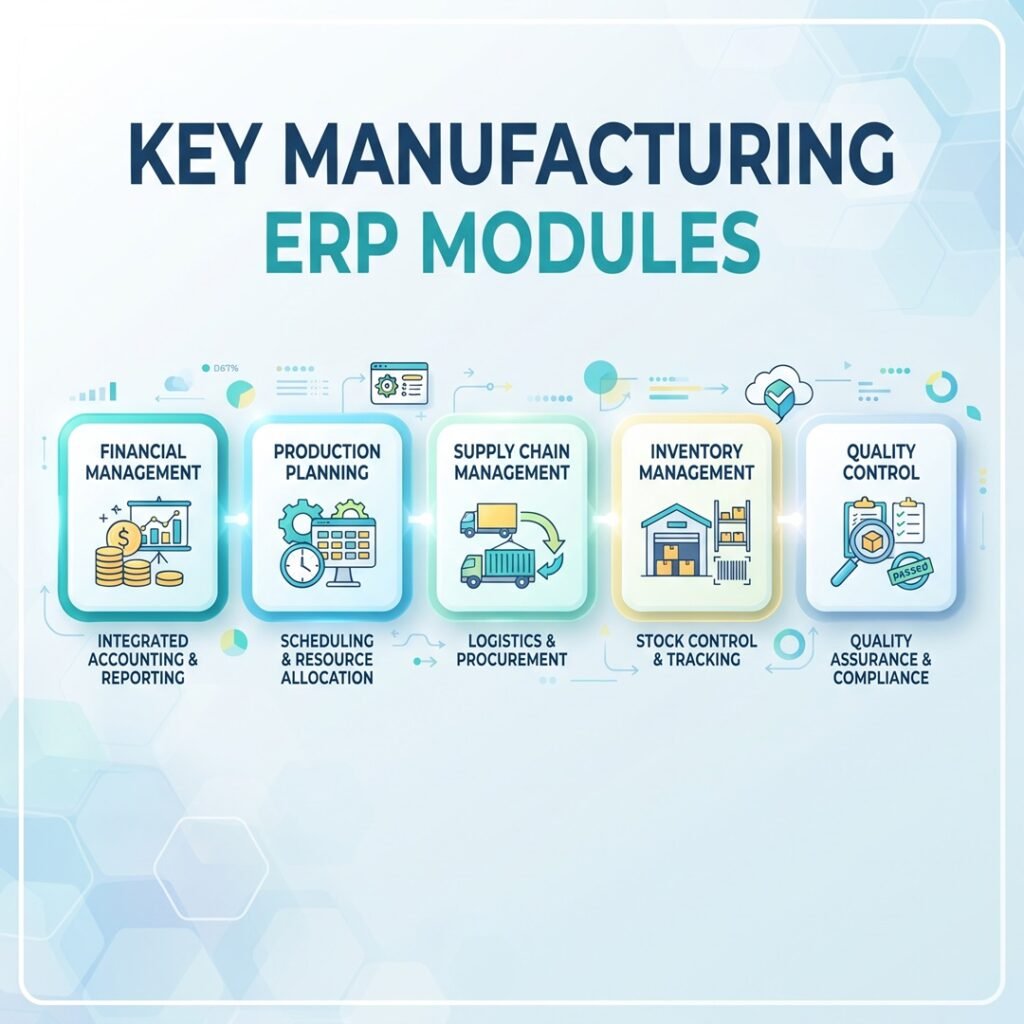
Your manufacturing ERP system can include the modules required to manage the complete production lifecycle.
Production orders, production calendars, capacity planning, work center schedules, and production status tracking.
Product recipes, component lists, assemblies, material quantities, revisions, and production specifications.
Material demand calculations based on production plans, BOMs, current inventory, and expected supply.
Work order creation, job routing, assigned operations, material issues, completion records, and production progress.
Stock availability, warehouse locations, goods receipts, material transfers, batch tracking, and inventory adjustments.
Purchase requisitions, purchase orders, supplier records, delivery tracking, and purchasing approvals.
Production output, labor time, work-in-progress, operation status, scrap, rework, and downtime records.
Inspection plans, acceptance criteria, test results, defect reporting, quality holds, and corrective actions.
Equipment records, preventive maintenance schedules, service history, maintenance requests, and downtime tracking.
Shift schedules, labor assignments, work hours, production teams, and labor cost allocation.
Finished product receipts, storage locations, stock transfers, order fulfillment, and dispatch preparation.
Material consumption costs, labor costs, overhead allocation, work-in-progress valuation, and production variance reporting.
Customer orders, delivery commitments, demand forecasts, and production requirements linked to sales.
Lot numbers, serial numbers, production batches, material origins, and finished-product tracking where required.
Production output, capacity utilization, material consumption, inventory status, quality metrics, and manufacturing costs.
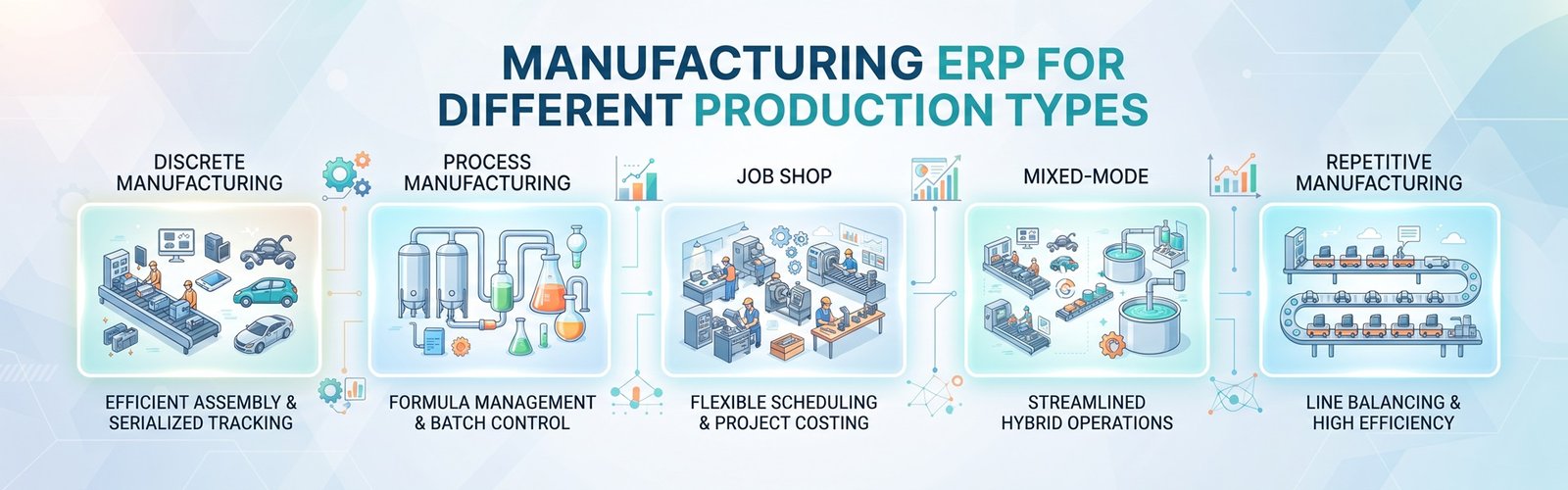
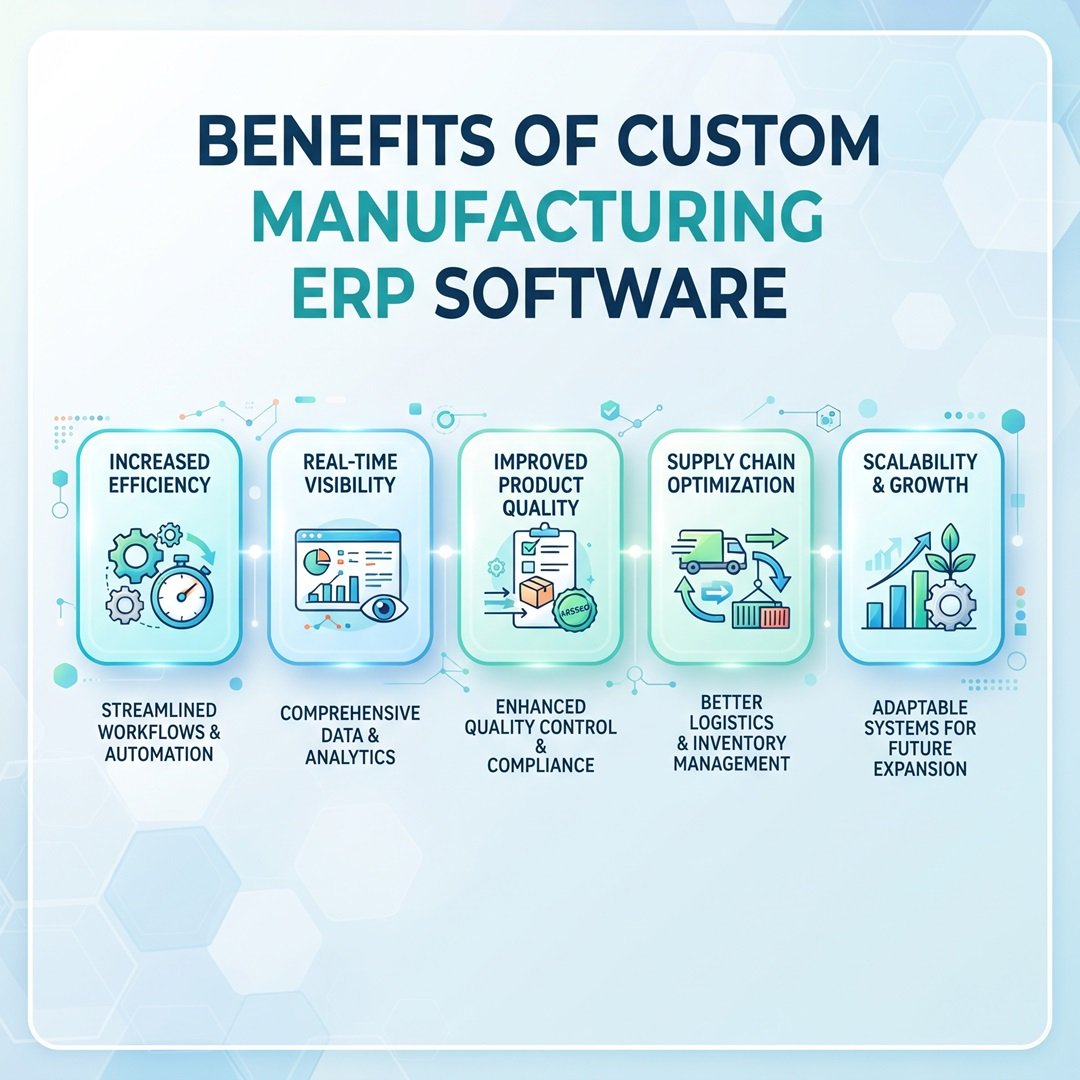
Coordinate production orders, schedules, materials, and available capacity.
Compare planned material requirements with actual consumption.
Connect purchasing, warehouse activity, material issues, and finished goods.
Monitor work orders and work-in-progress throughout manufacturing.
Record inspections, defects, corrective actions, and quality approvals.
Analyze material, labor, overhead, and production variances.
Connect production, procurement, inventory, sales, and accounting information.
Use dashboards and reports to identify bottlenecks and operational trends.