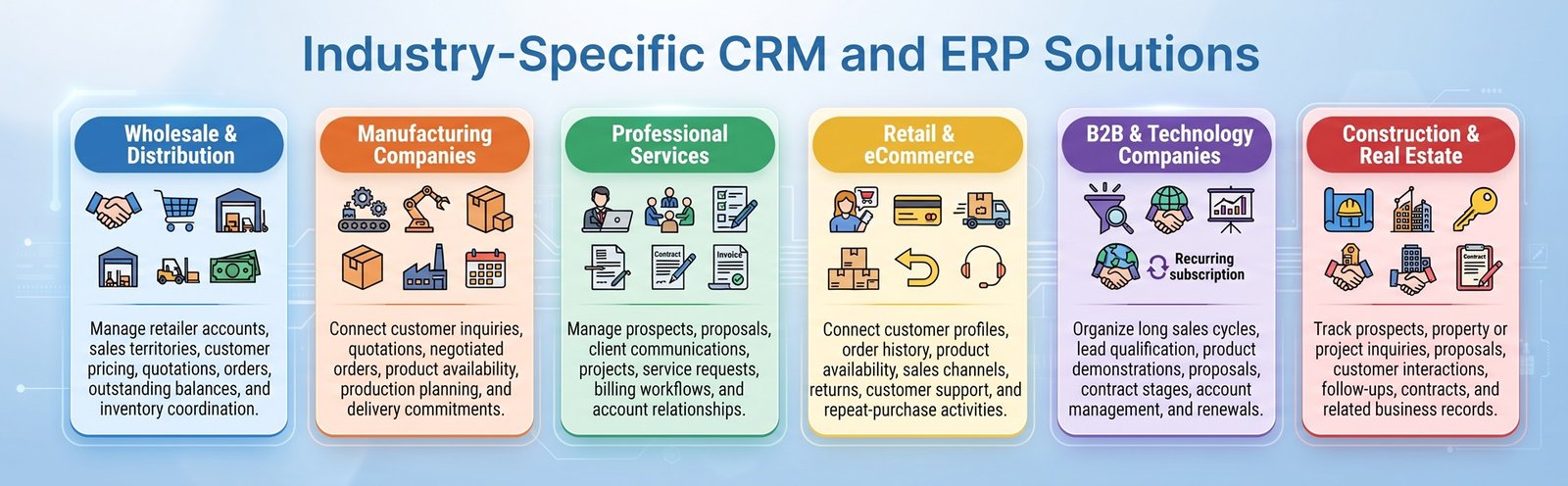
Connect customer relationships, sales operations, and business management with custom CRM ERP software built around your workflows. STSB develops integrated solutions that help businesses manage leads, track sales opportunities, organize customer information, automate follow-ups, and connect customer activities with orders, inventory, invoicing, and reporting.
Whether you need a customized CRM connected to your existing ERP or a unified CRM and ERP platform, we can help you plan a solution that fits your business.
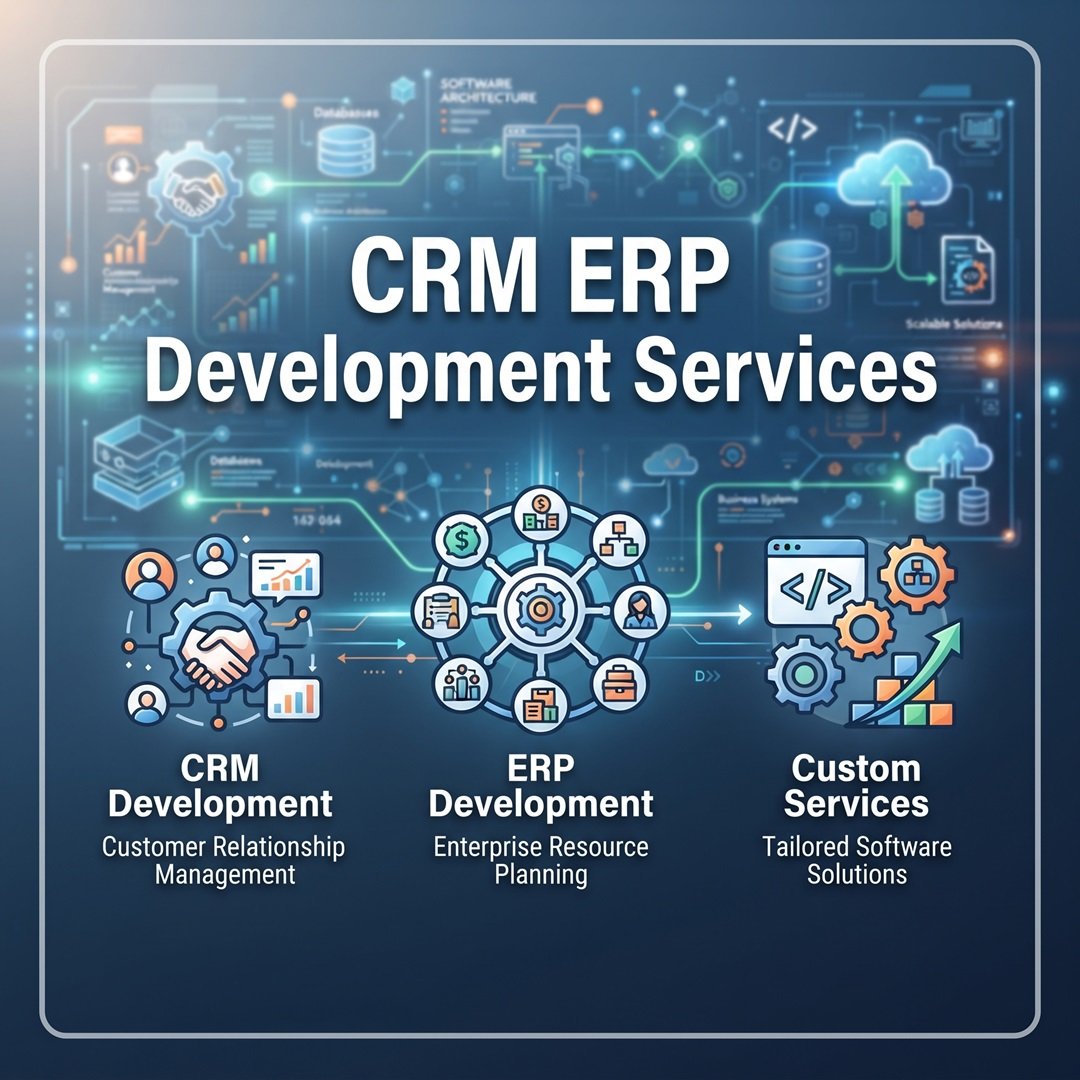
Custom CRM Development
Manage leads, contacts, customer accounts, sales opportunities, communication history, and customer relationships through a centralized CRM system.
Sales Pipeline & Automation
Track opportunities through customizable sales stages, assign tasks, schedule follow-ups, manage quotations, and automate routine sales activities.
CRM & ERP Integration
Connect customer records and sales activities with orders, inventory, purchasing, invoicing, and financial workflows to reduce duplicate data entry.
Customer Service & Support CRM
Manage service requests, support tickets, complaints, response assignments, resolution status, and customer service history.
Customer Portal Development
Provide authorized customers with access to relevant account information, quotations, order status, invoices, service requests, or other self-service features.
CRM ERP Reporting & Analytics
Analyze lead conversion, sales performance, customer activity, revenue trends, outstanding orders, support performance, and other business metrics.
Improve Customer Relationships and Business Efficiency
An integrated CRM ERP system can help your business:
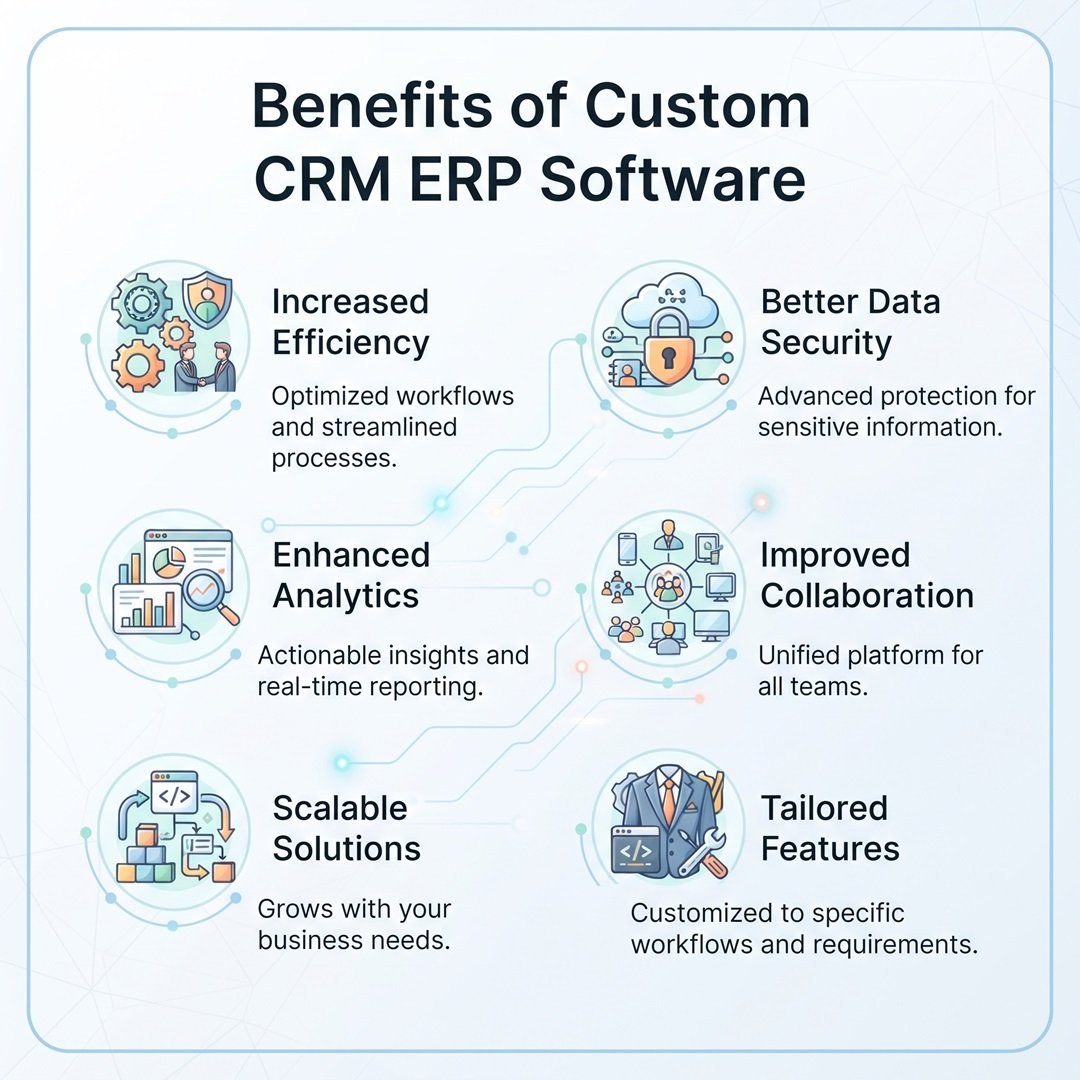
Create a unified customer view: Keep customer details, communications, sales opportunities, orders, and service records connected.
Improve lead management: Track leads from initial inquiry through qualification, proposal, and conversion.
Strengthen sales follow-ups: Organize reminders, meetings, tasks, and sales activities.
Reduce manual data entry: Share relevant information between CRM and ERP modules.
Improve order visibility: Connect customer commitments with inventory, fulfillment, and invoicing workflows.
Support customer service: Give authorized teams access to relevant customer and order history.
Improve sales reporting: Monitor pipeline value, conversion rates, sales activity, and revenue trends.
Coordinate departments: Help sales, operations, finance, and customer service work from consistent business information.
Scale with your business: Add users, departments, customer segments, and modules as requirements evolve.
Connect Your Customer Data with Essential Business Tools
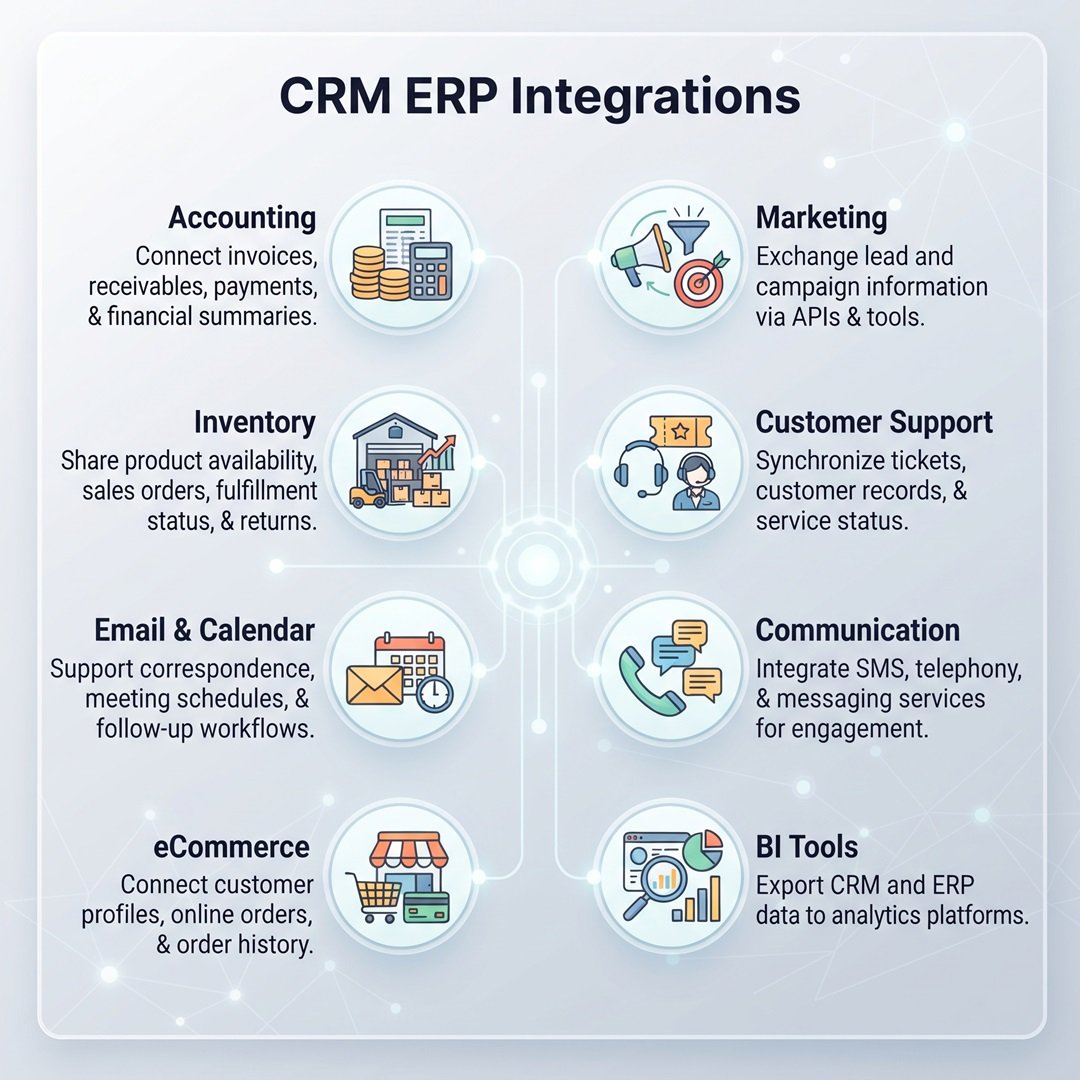
A CRM ERP platform can integrate with compatible third-party systems to help maintain consistent information across your business.
Accounting & Financial Software: Connect customer invoices, receivables, payments, and financial summaries.
Inventory & Order Management: Share product availability, sales orders, fulfillment status, and returns.
Email & Calendar Services: Support customer correspondence, meeting schedules, and follow-up workflows where integrations are available.
eCommerce Platforms: Connect supported customer profiles, online orders, and order history.
Marketing Platforms: Exchange lead and campaign information through compatible APIs or integration tools.
Customer Support Systems: Synchronize tickets, customer records, and service status where supported.
Communication Services: Integrate supported SMS, telephony, or messaging services for notifications and customer engagement.
Business Intelligence Tools: Export or connect CRM and ERP data to compatible analytics platforms.
Integration feasibility depends on provider APIs, account permissions, licensing, data formats, and project requirements.
Protect Customer Data and Business Information
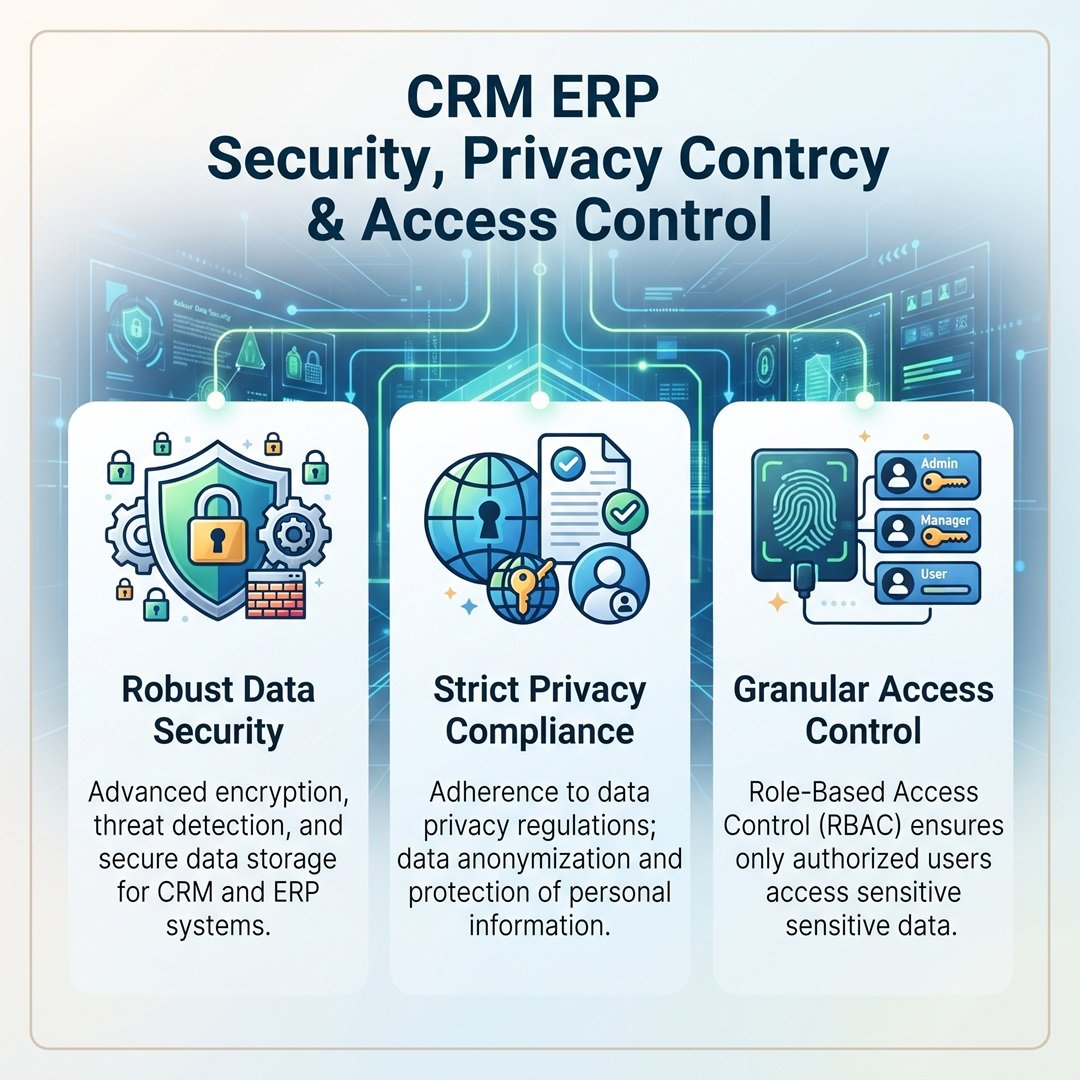
CRM ERP platforms can contain personal contact information, customer histories, sales records, financial details, and confidential business data. STSB can build appropriate controls to help protect these records.
Role-based access control: Restrict information based on job responsibilities and permissions.
Secure authentication: Support appropriate login controls and multi-factor authentication where required.
Audit trails: Record important changes to customer records, opportunities, orders, and permissions.
Data protection: Apply suitable security measures to data transmission, storage, and access.
Approval workflows: Control sensitive actions such as discounts, quotation changes, and order approvals.
Backup and recovery: Plan backups and recovery procedures appropriate to the system architecture.
Privacy-aware data handling: Define data access, retention, and deletion workflows according to business requirements.